
The Asturian firm digitalises and centralises the collection of whey and slurry in rural communities
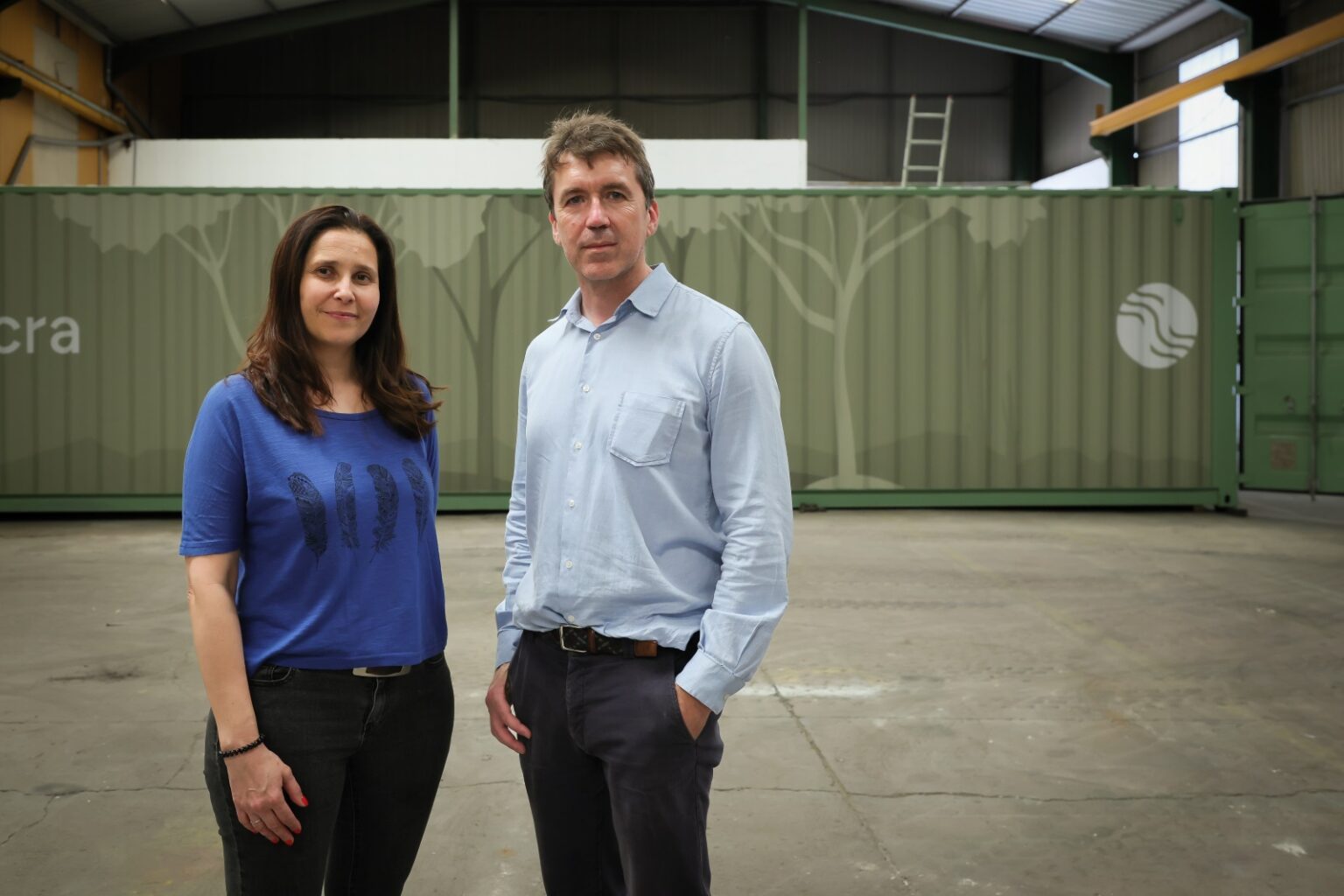
A shipping container in the heart of the Picos de Europa National Park. That is the unusual sight that can be seen in Tielve, in the municipality of Cabrales (Asturias), since last October. Inside there are no goods that have crossed the seas, but a 14,000-litre tank equipped with technology to collect and analyse the whey produced by around ten cheese dairies of the Cabrales Designation of Origin. It is the first project of Agrolinera, a start-up founded in May 2022 that seeks to digitalise, centralise and add value to livestock waste. As well as collecting awards for its idea, in 2024 it already billed its first 50,000 euros, and this year it expects to multiply that figure tenfold to half a million euros.
The company, based at the Parque Tecnológico de Asturias (Oviedo), was founded by Verónica Menéndez and Juan Gutiérrez. Both lived in China for eight years running a business venture of their own focused on the traceability of industrial products manufactured there and shipped to Europe. They kept it going until 2020, when they began to explore developing something in their home region. They wanted to improve the use of slurry and whey to produce biogas, “but it was complicated because most farms are small and scattered across the territory, and collecting the waste cost more than the value that would later be obtained from it,” explains Gutiérrez. So they focused on solving that equation until they came up with a new formula that was validated by the sector itself.
In 2022 they founded Agrolinera; between 2023 and 2024 they developed the necessary equipment, and last autumn they installed it in Cabrales. There they work with around ten artisan cheese dairies. The formula is simple. The dairies take their whey to the container —very close to their premises—, where they identify themselves on a screen with their user account. Then they connect the hose, unload the waste and that’s it.
The cloud-connected system enables remote monitoring to coordinate the subsequent collection by lorry and its delivery to a nearby biogas plant, which is the one that pays Agrolinera. “The idea is that in future this collection could be daily, because the fresher the waste, the more value it has,” adds Menéndez, who points out that they have R&D projects to analyse other uses for this whey, which is rich in protein and has many applications in food, cosmetics and the pharmaceutical industry.